
Order planning · 8 MIN READ
Small MOQ Wholesale Squishy Toys: Plan a 12-Piece Trial Order
Small MOQ wholesale squishy toys are useful when a retailer wants to learn which shapes, materials, or price positions fit its customers before scaling. The most useful trial order is not simply the smallest possible cart; it is a controlled set of SKUs that produces comparable feedback. Start with 12 pieces per style as a quote request, keep the assortment easy to count, and record what must change before the reorder.
A 12-piece-per-style quote request is a practical way to test a focused assortment without committing to a full case of every design. Treat it as a request starting point, then ask the supplier to confirm the production MOQ, pack-out, material, filling, and freight for each selected SKU before production.
What “12 pieces per style” actually means
CurioSpan uses from 12 pcs / style as a request point for mixed wholesale selections. That number helps a buyer ask for a small, clear trial order; it is not a promise that every SKU has a 12-piece production MOQ. A supplier may set a higher production minimum for a particular shape, color mix, display format, or custom package.
Ask the quote to show three separate fields: requested quantity, confirmed production MOQ, and pack-out. Keeping these fields separate prevents a trial request from being mistaken for a factory commitment. It also gives your team a clean reason to change a quantity before the order is paid and released to production.
Keep style, color, display box and carton quantities separate
Write one line for each exact SKU and variant you want quoted. A request for 12 pieces of one style does not automatically mean 12 pieces of every color, one freely mixed display box, or permission to split a master carton. Ask the quote to resolve each unit of ordering.
| Field | What it records | What to confirm |
|---|---|---|
| Style / SKU | The selected design and exact catalog identifier | Whether a size, face or package change has its own order line |
| Color / variant | The requested version and quantity or ratio | Fixed colors versus an assorted mix, and any separate color minimum |
| Production MOQ | The quantity the supplier confirms for making the chosen SKU | Record it separately from your initial 12-piece request |
| Display box / inner pack | Pieces in one approved retail or inner package | Whether the selected quantity fits that pack and whether the box is included |
| Master carton / case | Pieces and packs in the confirmed shipping carton | Whether a smaller request is accepted and how the final mixed shipment will be packed |
The current catalog shows why this matters: CS-VAS-02 lists 12 pieces per display box and 96 per carton, while CS-CR-50 lists 12 per display box and 216 per carton. CS-PU-02 lists 144 per carton but leaves its display-box quantity to confirmation. None of these case quantities confirms the production MOQ.
Build a controlled trial instead of a random sample box
Choose the trial around a question your store needs to answer. For example, you might compare food shapes with character shapes, crunchy / brick clay with Vaseline filling, or compact counter pieces with larger feature items. Keep the number of variables manageable so your notes remain useful.
| Trial structure | Calculation | What it helps you compare |
|---|---|---|
| Six selected styles | 6 × 12 = 72 pieces | Shape, material, and shelf role across a compact assortment |
| Eight selected styles | 8 × 12 = 96 pieces | A wider color or category test before a larger reorder |
| Three material groups | 2 styles per group × 12 = 72 pieces | Whether shoppers respond differently to each sensory story |
These are planning examples, not a bestseller promise or a required order size. The final quantity should follow the supplier’s SKU-level MOQ, pack-out, and your destination-specific freight quote.
Choose SKUs that answer a buyer question
Use public product facts as your starting grid, then request any missing details in the quote. For example:
- CS-VAS-02 Vaseline Cheese Cube Squishy is listed with a TPR outer, Vaseline filling, a 6 × 6 cm size, and 96 pcs/carton. Its page lists 12 pcs/display box; confirm the closed and open display dimensions and final pack-out by SKU.
- CS-CR-50 Color-Changing Lemon Crunchy Squishy is listed with a TPR outer, brick clay filling, an approximately 6 × 7 × 7.5 cm size, and 216 pcs/carton. The public page lists 12 pcs/display box for this color-changing lemon style, which is useful for discussing shelf replenishment.
- CS-PU-02 Crispy-coated Butter Bar Squishy is listed with a PU slow-rising foam outer, solid PU foam with no separate filling, a 15 × 6.5 × 5 cm size, and 144 pcs/carton. Its crispy-coated butter-bar packaging details should be confirmed by SKU.
These three choices create a material contrast and a pack-out contrast without claiming that one style will sell best. If a dimension, display-box count, or color mix is marked representative or needs confirmation, carry that wording into your internal order sheet.
Record product facts and logistics facts separately
A trial order produces two different kinds of learning. Product notes cover shape, hand feel, filling, finish, size, and the way the item looks in the proposed display. Operations notes cover how many pieces arrive per display box or inner pack, how many cartons are needed, carton dimensions, gross weight, and whether the assortment is single-style or mixed.
Do not use a catalog carton count as a universal display-box rule. A carton can contain several inner boxes, a mixed assortment, or a packaging format that still needs confirmation. Ask for the exact carton quantity and gross weight for the final SKU list before choosing air, sea, or DDP freight.
Turn the trial into a reorder decision
Give each style a simple review record: SKU, received quantity, packaging condition, display position, customer comments, and the next action. “Reorder,” “change quantity,” “change material mix,” and “do not repeat” are more useful than a vague note that a product felt popular.
When a style is ready to repeat, send the original SKU and the approved pack-out back with the request. Ask the supplier to reconfirm current price, production MOQ, packaging, lead time, and freight assumptions. A small trial becomes valuable when the second quote can be compared directly with the first.
Download and fill in a SKU-level trial-order worksheet
Open the CSV in Excel or another spreadsheet app. It contains the three catalog examples above and blank lines for your own choices. The example requested quantities are 12 pieces each, making a 36-piece planning request, not an accepted order. Delete or replace any example that does not fit your store.
- Buyer fills: selected SKU, color or variant, quantity per line, destination, required shelf date and packaging or document requests.
- Supplier confirms: production MOQ, color minimum, display quantity, case quantity and accepted order quantity in the written quote.
- Buyer approves: reconcile those confirmed fields with the quote reference and record the approval status before payment or production.
Catalog reference fields are dated October 12, 2026. Blank confirmed fields mean confirmation is still needed; they do not mean zero or not applicable. Copy a SKU onto separate lines when you need separate color quantities, and record the requested ratio rather than assuming a mixed-color pack. Keep the final quote with the completed file for the reorder.
A retail trial is still a commercial order: a small quantity alone does not confirm freight availability, included delivery, or document coverage. Use the quote checklist and pack-out guide to close the remaining questions.
Send a quote brief the supplier can answer
Include your company or store, target market, destination city or postal code, selected SKUs, requested quantity per style, preferred shipping mode, and any display or labeling requirement. Ask for the exact material, filling, finished dimensions, unit weight, display-box quantity, inner pack, carton quantity, carton size, gross weight, production MOQ, and payment terms for each SKU.
That brief keeps a small-MOQ wholesale squishy toy order small enough to test while making the next decision easier to defend. Use the CurioSpan catalog to build the shortlist, then request a written quote before treating any request quantity as confirmed production quantity.
After the requested quantities and packing are confirmed, use the landed-cost calculator to add the quoted goods, packaging, freight and other charges. Keep unknown charges unresolved; the calculator’s example is not a current quote.
Does 12 pieces per style mean 12 pieces of every color?
No. It is a quantity request for the selected style, not an automatic per-color offer. State each requested color or variant and its quantity or ratio, then confirm any color minimum and the approved assortment in the quote.
Does a carton quantity set the production MOQ?
No. Carton quantity describes pack-out. Record the requested quantity, confirmed production MOQ, display-box quantity and carton quantity separately. A smaller request, carton split or mixed shipment must be confirmed for the selected SKU.
Is 12 pieces per style the confirmed production MOQ?
No. It is a request starting point for a mixed wholesale quote. Confirm the production MOQ, color mix, packaging minimum, and final quantity for each selected SKU before production.
How many styles should a small trial order include?
Use the question you want the trial to answer. Six styles at 12 pieces is an illustrative 72-piece plan, and eight styles at 12 pieces is an illustrative 96-piece plan. Neither is a bestseller promise or a required order size.
Can I mix different squishy toy styles in one order?
Mixed styles can be requested from the 12-piece-per-style starting point. Ask for the final SKU-level MOQ, carton plan, and whether each style has a separate display or inner-pack rule.
What should I compare after receiving the trial order?
Compare the received SKU and quantity, material and filling, finished size, packaging condition, display presentation, customer comments, and the reorder action. Keep product observations separate from freight and carton observations.
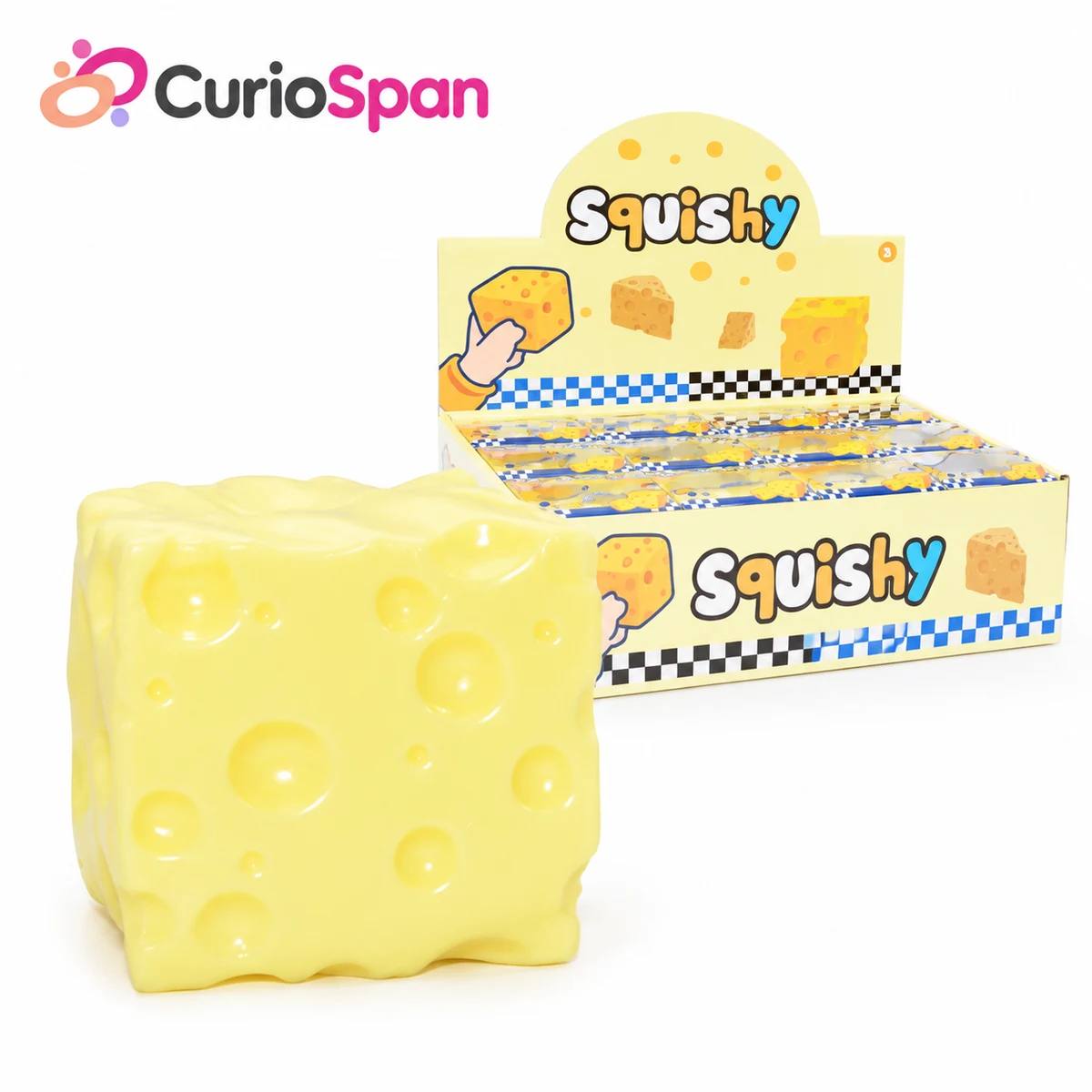
Vaseline Cheese Cube Squishy
6 × 6 cm · TPR outer · Vaseline filling · 96 pcs/carton; 45 × 32 × 35 cm; gross 23.5 kg; 12 pcs/display box; confirm closed and open display dimensions separately
View SKU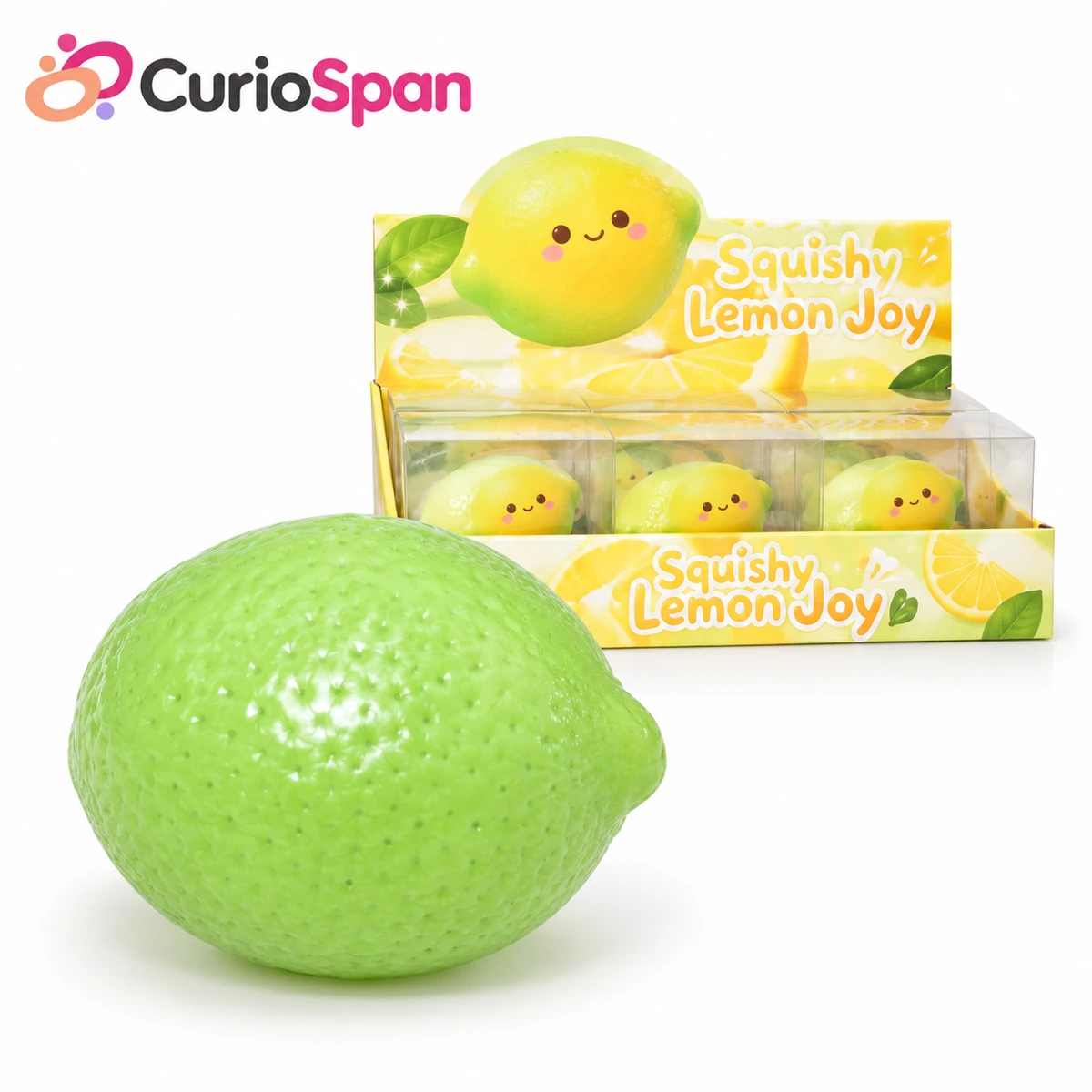
Color-Changing Lemon Crunchy Squishy
approx. 6 × 7 × 7.5 cm · TPR outer material · Brick clay filling · 216 pcs/carton; 62 × 35 × 43 cm; gross 22.6 kg; 12 pcs/display box (color-changing lemon style)
View SKU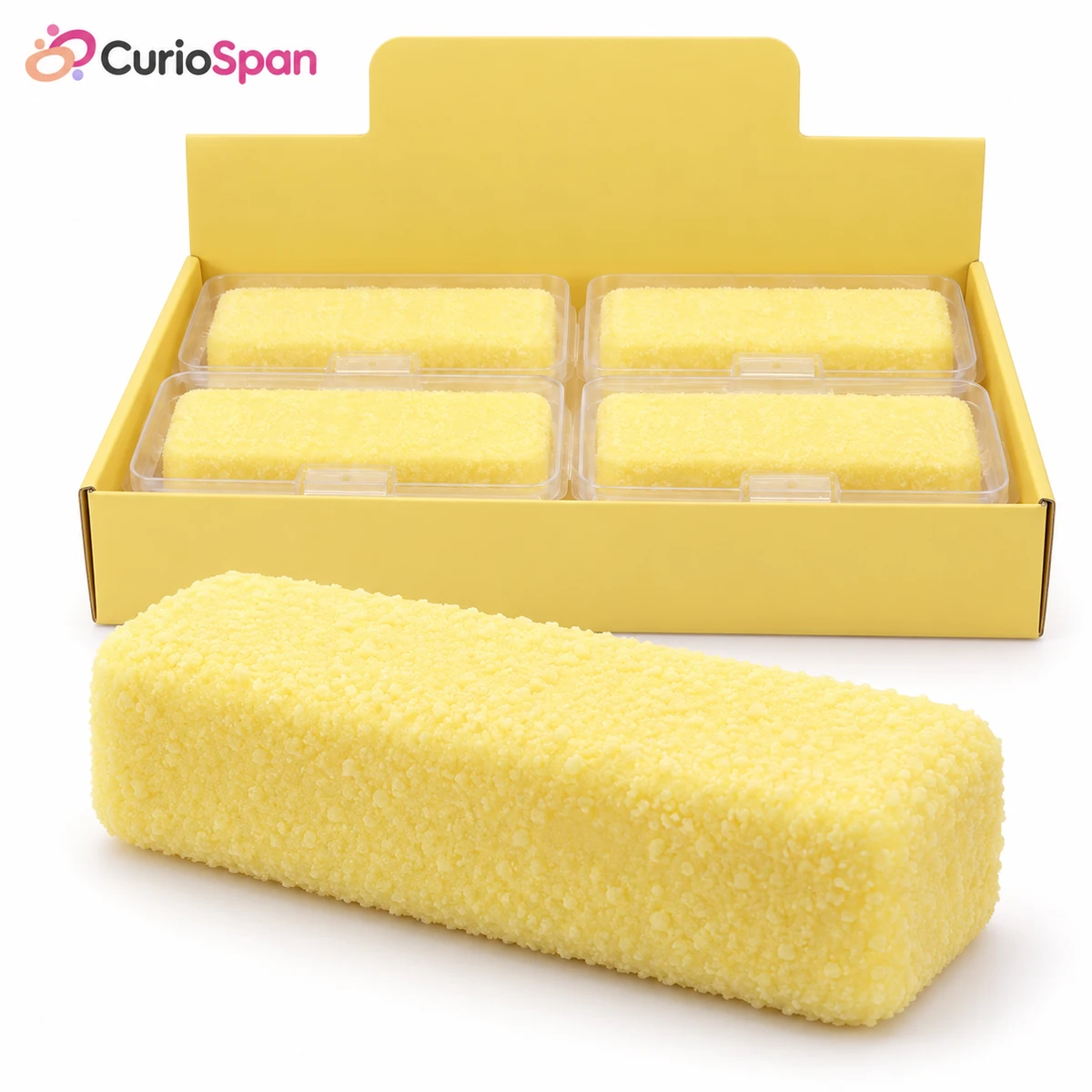
Crispy-coated Butter Bar Squishy
15 × 6.5 × 5 cm · PU slow-rising foam · Solid PU foam; no separate filling · 144 pcs/carton; 65 × 35 × 42 cm; gross 17 kg; crispy-coated butter-bar variant; confirm final coating and pack-out by SKU
View SKU