
Assortment planning · 5 min read
Mini vs Jumbo Squishies Wholesale: Choose Sizes for Your Store
A product called mini can be a useful checkout candidate, while a larger design might anchor a display. Those names still leave the main buying questions unanswered: how much space does the packed item occupy, how many units fit your fixture, and what quantity can you replenish? Use measurements and samples to turn size labels into a workable wholesale selection.
Treat mini, large and jumbo as product labels, not a shared measurement standard. Compare the exact SKU’s listed dimensions and weight, request missing measurements, then check the retail packaging against your shelf or shipping box. Size does not establish material, filling, age suitability or sales performance. Start with a defined display role and confirm pack-out before ordering.
Translate mini and jumbo into measurable requirements
Write down the space limit before searching the catalog. For a counter tray, record its usable internal width, depth and height. For an online gift order, record the inside dimensions of the outer shipping box and the space reserved for protective packaging. A description such as “small enough for our counter” cannot be checked consistently by the supplier.
If a listing gives one dimension, request the other two and identify which axis the stated number describes. Do not turn a 7 cm listing into an assumed 7 × 7 × 7 cm cube. Add a photograph beside a ruler or a dimensioned drawing to the buying brief when orientation matters.
Compare real catalog sizes without assuming identical construction
The examples below show why a single size label is a weak comparison. These are separate designs, not mini and jumbo versions of one mold. The measurements and weights are listed product data; none is the finished retail-pack size.
| SKU and design | Listed product size | Unit weight | Question before buying |
|---|---|---|---|
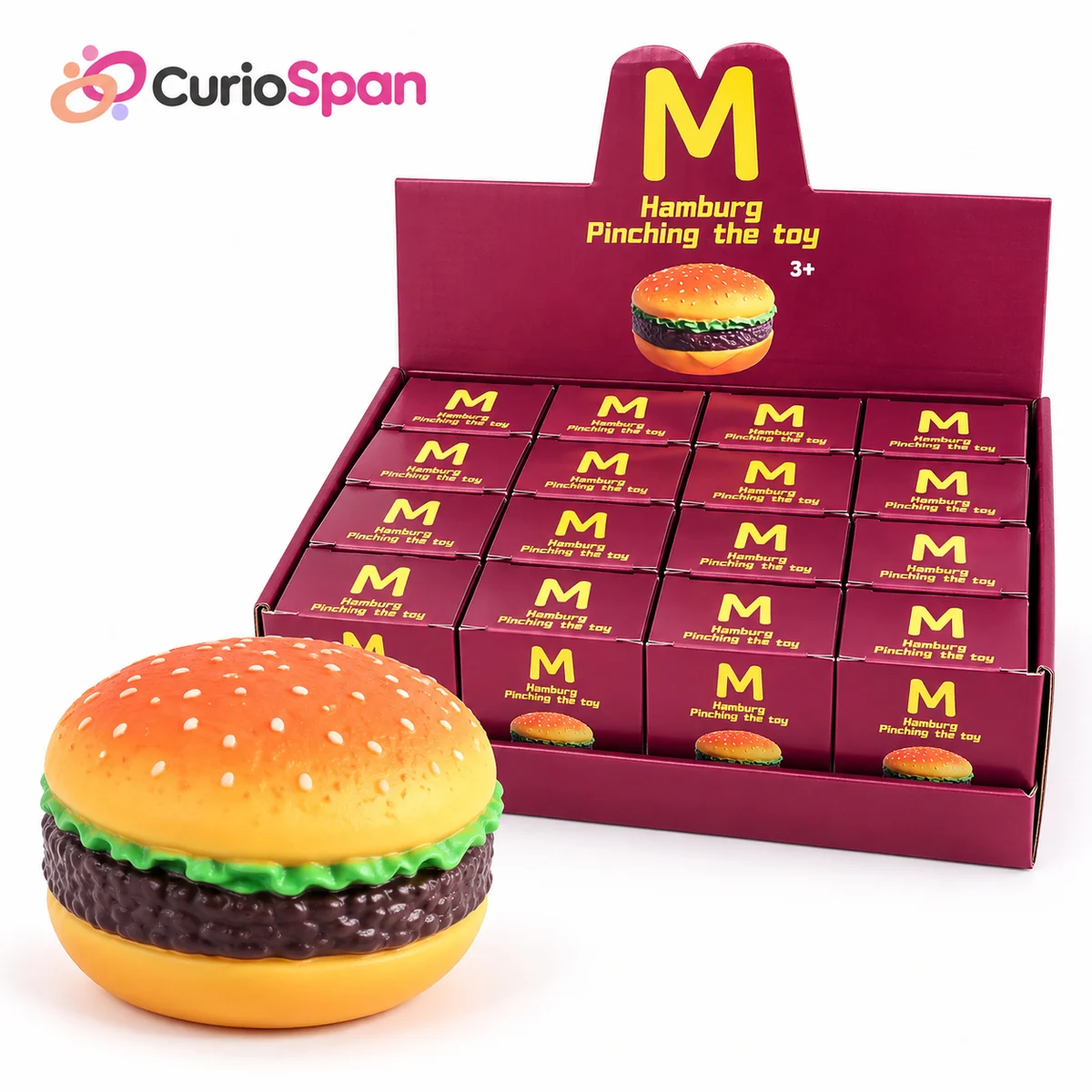
| CS-LF-66 Mini Hamburger | 7 cm; one dimension supplied | 47 g | What are the color-box dimensions? |
| CS-LF-53 Yellow Duck | 26 cm; one dimension supplied | 211 g | What width and depth does the packed item need? |
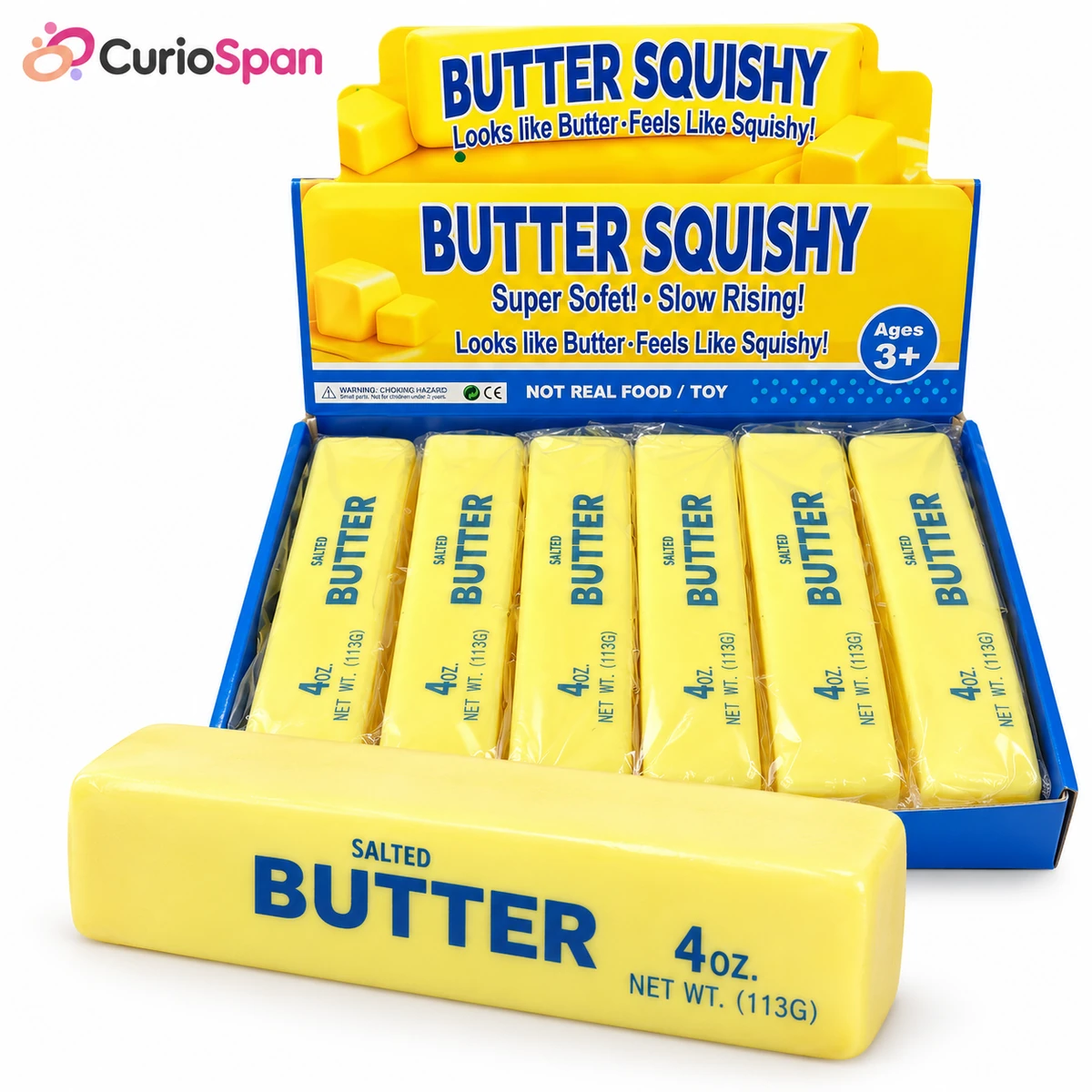
| CS-PU-01 Large Butter Bar | 23 × 4.5 × 4.5 cm | 105 g | Can the intended pack hold its long shape? |
The hamburger and duck list TPR outer material with flour filling. The butter bar lists solid PU slow-rising foam with no separate filling. Its 23 cm length does not make its feel or packing needs equivalent to the duck. Compare construction alongside dimensions, using the wholesale spec-sheet guide when fields are incomplete.
Match each size to a display role
For a compact counter selection
Check the packed unit from a standing customer’s viewing angle. Can the shape and price be seen above the tray edge? Does the item remain identifiable beside the other styles? Keep enough room for a shopper to remove one unit without disturbing the arrangement. Confirm these points with a physical mock-up.
For a larger feature item
Check shelf depth, overhang and the visibility of nearby products. Decide whether the display will hold boxed stock or one display sample with stock elsewhere. A larger piece should earn its place through your merchandising plan and observed sales; a larger silhouette alone is not evidence of higher demand.
For a focused size decision, compare the 17cm and 20cm capybara squishies. If your display uses fruit shapes, the large fruit squishy size and packaging guide compares the listed strawberry, grape and pineapple models and the packing details to confirm.
Calculate capacity from the packed footprint
Use the actual retail package, including headers, hanging tabs or outer sleeves. In a hypothetical tray with 48 cm usable width, a confirmed 8 cm-wide pack has an arithmetic maximum of six units across. If handling gaps or dividers are needed, six may not be practical. Depth and height still need separate checks.
Record the tested number of units facing the customer and the number behind each facing. Multiply those two figures to obtain display capacity. Keep back-room stock separate. This gives a useful quantity target without assuming that every square centimeter can be filled or that a soft product can be permanently compressed to fit.
Separate product weight from shipping and carton decisions
A lighter individual item does not by itself establish a cheaper shipment. Ask for the final packed carton dimensions, gross weight and delivery quotation for your actual selection. Product weight excludes at least some packaging; multiplying it by the order quantity does not produce a confirmed shipping weight.
Pack quantities also differ. CS-LF-66 lists 16 pieces per inner box and 256 per carton. CS-LF-53 lists 10 per inner box and 80 per carton. CS-PU-01 lists 144 per carton, with display-box quantity to be confirmed. These are packing records, not automatic order minimums. Ask whether your requested quantities can use the listed inner packs or need another packing arrangement.
Test the size choice before expanding the range
Shortlist a compact option and a larger option that each have a clear role. Request physical samples with the intended packaging, then photograph them in the same fixture. Record packed dimensions, product visibility, ease of removal and the quantity that fits. Keep sample observations separate from assumptions made from catalog photographs.
Once you have sales records, compare performance per SKU together with the space each one occupies. Include stockout days in your notes so an empty shelf is not mistaken for weak demand. Expand a size group because the evidence supports it, and retain the approved packaging reference when reordering.
Send a size-based buying brief
Use the wholesale catalog to select exact SKUs. In your quote request, add the requested pieces per SKU, maximum packed dimensions, display or gift-box use, destination and any missing measurements. Ask for confirmation of the retail pack, inner-box count and final shipment carton plan. This gives the supplier a specific fit requirement and makes competing options easier to compare.
Buyer questions
Is there a standard centimeter cutoff for mini or jumbo squishies?
Use the exact product measurements rather than applying a universal cutoff. Names such as mini, large and jumbo do not provide all three dimensions, and different designs can use those labels differently.
Can I use product dimensions to choose a gift or shipping box?
They are a starting reference. Request the packed dimensions and test the actual package with any insert or protective material. Product measurements alone do not confirm the finished box size.
Should I buy more mini squishies than larger styles?
Base the mix on your display capacity, approved samples, budget and SKU-level sales records. Confirm accepted quantities and pack-out in the quote. There is no fixed size ratio that fits every retailer.
Explore the catalog examples

Product examples use CurioSpan catalog information available on October 8, 2026. Planning examples are illustrative; confirm the selected SKU and order terms before purchasing.